
A Fake KGB Defector's Tale
Based on the Lithuanian KGB files

In the early 1960s, the foreign intelligence branch of the Lithuanian KGB, formally known as the First Department, produced a summary description of how its agent deceived the U.S. intelligence operatives in West Germany by pretending to be a defector from the KGB.1
This KGB document offers valuable insights on how the KGB ran fake defector operations during the Cold War and how the Russian intelligence services might do so today. The cover stories and technologies might be different, but the intentions and tactics have remained the same.
Meet Agent GRANITE
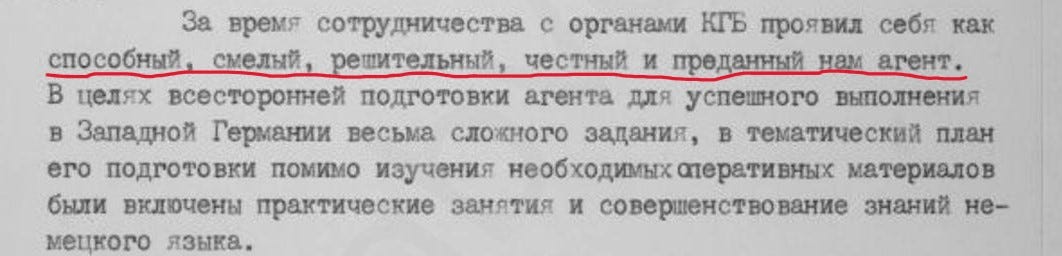
The main protagonist in this particular KGB operation was an individual whose code name was GRANITE (in Lithuanian, GRANITAS). GRANITE was born in 1922 and joined the armed anti-Soviet Lithuanian resistance during World War Two. He was arrested by Soviet state security in 1948 and recruited to work against his former comrades in the resistance. The details of his activities during this period were not described, but the KGB document called him a “capable, courageous, decisive, honest, and loyal” agent. In other words, he was well-versed in the trade of treachery. Such a profile made him eligible for a more complex deception assignment beyond the Iron Curtain.
With the approval of the Lubyanka headquarters, GRANITE was trained for a foreign intelligence mission in West Germany by the Lithuanian KGB. He received practical operational training, including how to communicate via secret writing, how to receive instruction via radio, and how to service dead drops. He also had advanced German language lessons.
The mission
The Lithuanian KGB handlers instructed GRANITE to cross into West Germany illegally, go to the nearest West German police station, or U.S. military post, and claim that he was a KGB agent who wanted to defect. When questioned, he was to reveal that he was dispatched to infiltrate the Lithuanian emigre organization, the Supreme Committee for the Liberation of Lithuania (VLIK), by posing as a member of the underground anti-Soviet resistance movement. His purported mission for the resistance was to arrange the shipments of Western aid and provide secure coordinates for the air drops.
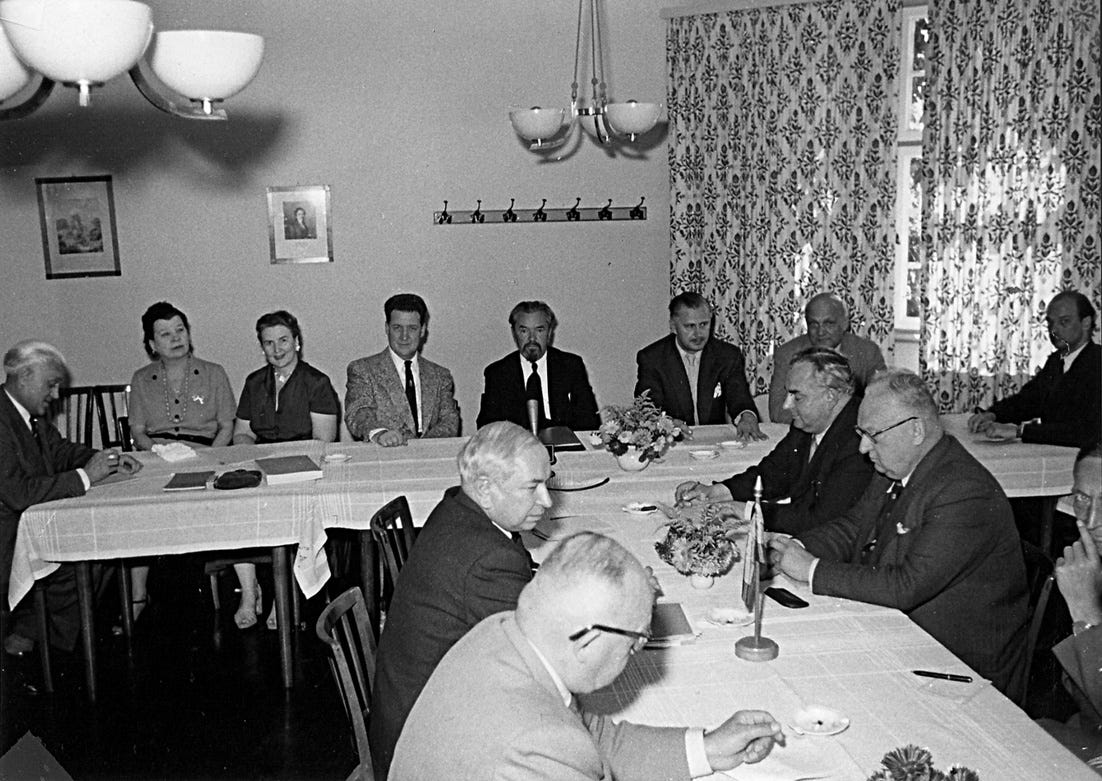
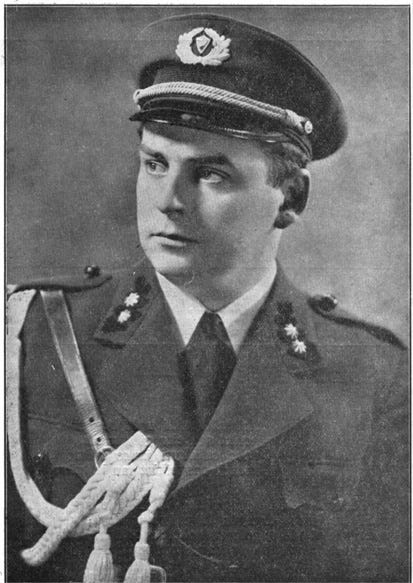
However, the real objective of GRANITE’s mission lay elsewhere. His KGB handlers wanted him to use the defection story to get close to Martynas Gelžinis, the head of the VLIK’s Press Department,2 and “remind” him of a promise he had made on the eve of World War Two.
In 1941, Gelžinis was imprisoned by the NKVD and in order to be released and allowed to immigrate to Nazi Germany, he allegedly agreed to become an NKVD agent. However, the NKVD and its successor organizations never heard from him again. GRANITE was to tell Gelžinis that his former handler had become very impatient and warn him that he better show up for a meeting with him in Berlin.
To convince Gelžinis that he knew of his hidden past, GRANITE was to show him a copy of his 1941 agreement to become an NKVD agent. Though the KGB seemed not to have believed that Gelžinis could be coerced into spying, they evidently wanted to use the blackmail to compromise him in the eyes of his West German and American allies and cast suspicion on his previous anti-Soviet activities and statements.
The Arrest
On October 26, 1956, GRANITE illegally crossed into West Germany in the region of the East German town of Sonneberg.3 Shortly thereafter, he showed up at the U.S. military headquarters in the West German town of Coburg about 12 miles southwest from Sonneberg where he declared that he wanted to defect. He was promptly put under arrest and transported to the U.S. military prison in the town of Kronberg im Taunus near Frankfurt.
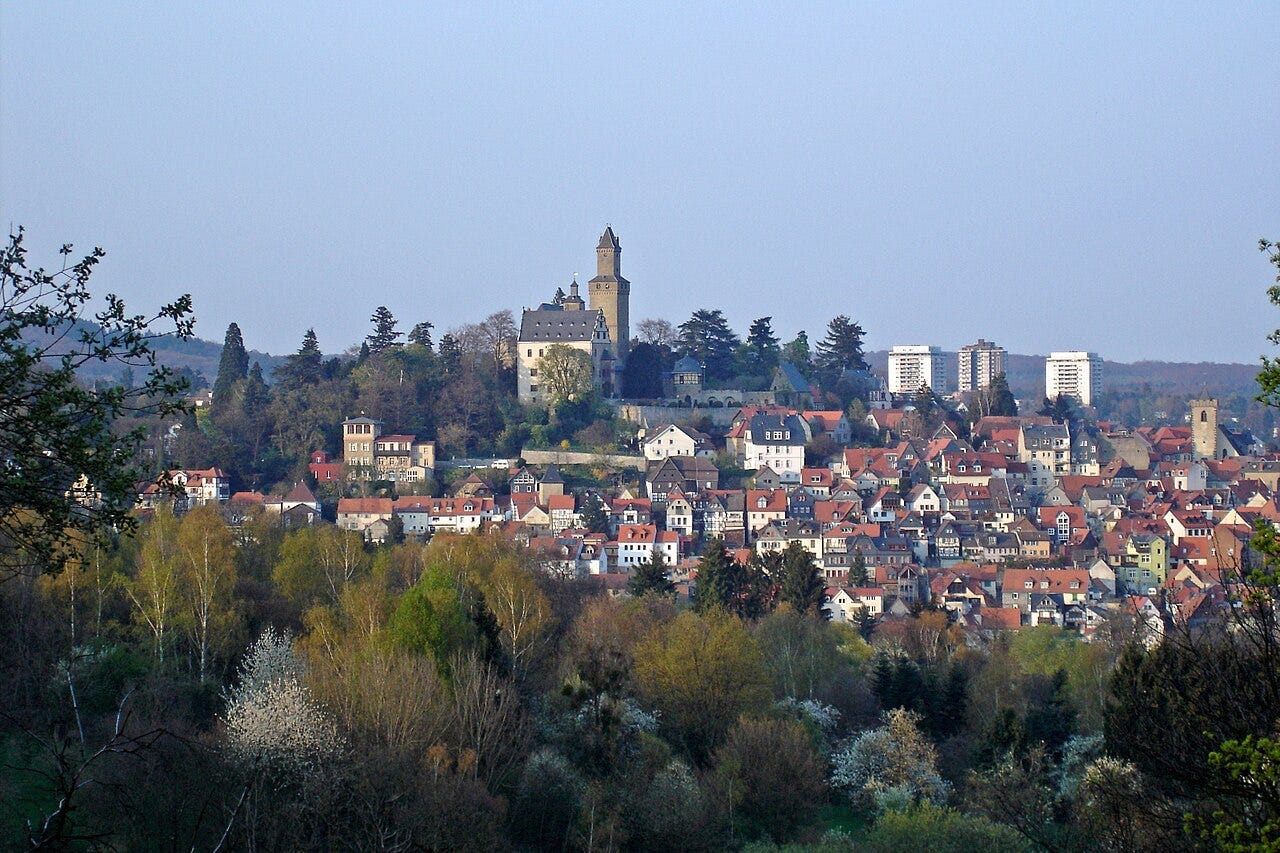

GRANITE later told his KGB handlers that he was held in solitary confinement for more than two months, until January 11, 1957. He claimed that after being arrested, he was stripped naked and that all his personal items, including money, were taken from him. He also claimed that he was interrogated every day and that sometimes he was awakened in the middle of the night and taken to interrogation.4 He reported that his interrogators were convinced that he was a fake detector sent by the KGB but he denied everything and firmly stuck to his story.
According to GRANITE, he was also subjected to a lie detector test. But when answering some simple, elementary questions led to GRANITE’s strong and unexpected physiological reactions, the use of the lie detector was discontinued as ineffective. The document did not state whether GRANITE was trained by the KGB to react in this way, but there was a strong hint that he was. The possibility that already in the mid-1950s the KGB knew how to beat the lie detector is troubling.
The Release
Given that GRANITE did not break under pressure, he was transferred to Frankfurt upon his release. He was given a spacious apartment and assigned a monthly stipend of 400 West German marks (the equivalent of $1,100 today). At the same time, he was kept under U.S. surveillance and prohibited from meeting with anybody from the Lithuanian emigre circles on his own. He was also not allowed to contact his sister who allegedly lived in the U.S.
Several months later, GRANITE was taken by U.S. intelligence officers to meet Gelžinis and confront him with the “evidence” that he had agreed to become an NKVD agent in 1941. According to GRANITE’s later testimony, Gelžinis panicked after realizing that his U.S. allies discovered his deeply held secret. The objective of GRANITE’s mission appeared to have been accomplished. Gelžinis was evidently compromised and, according to the KGB document, later had many “unpleasant” interactions with the Lithuanian anti-Soviet diaspora.5
The Attempt at Recruitment
GRANITE claimed that the reason U.S. intelligence officers treated him so generously after his release from prison was tactical: they wanted him to return to Lithuania and work for them as their agent-in-place. GRANITE was promised that he would be remunerated via packages sent from the U.K. to the address of one of his Lithuanian acquaintances.
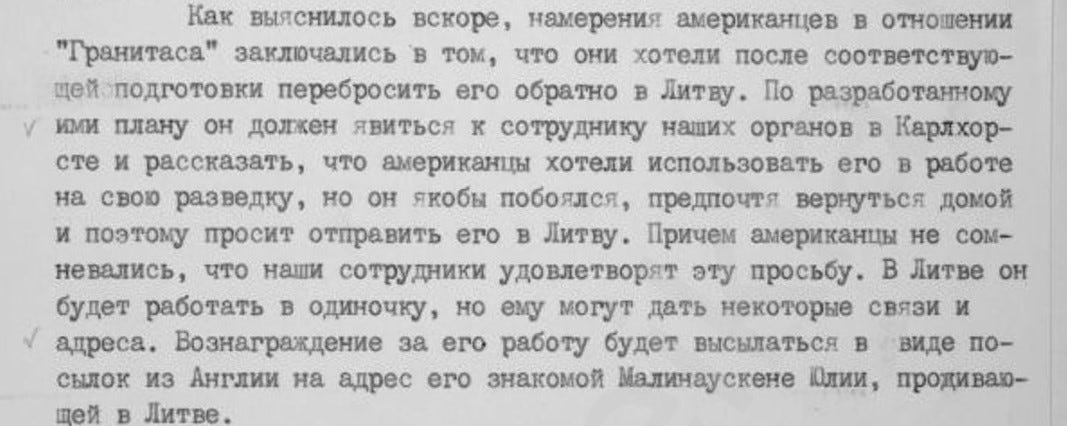
In other words, a KGB agent who faked his defection was asked by U.S. intelligence to fake his allegiance to his KGB handlers. And, as if to amplify the Cold War’s paranoid “wilderness of mirrors,” GRANITE agreed. But he did not really mean it.
Instructed by U.S. intelligence officers, GRANITE contacted his KGB handler and arranged a face-to-face meeting. He was told to ask his handler to help him return to Lithuania. However, being a loyal KGB agent, GRANITE revealed to his handler that he was operating under the U.S. instruction. The handler advised him that returning to Lithuania and faking allegiance to U.S. intelligence would not justify the time and the investment that the Soviet Union had put into his training. Instead, the handler ordered GRANITE to stay in West Germany at any cost. He was to return to Frankfurt and tell his U.S. intelligence handlers that the KGB did not want him back.
To dispel the KGB suspicion that GRANITE might really have been turned by U.S. intelligence and was now lying to them, he was asked to confirm his full allegiance to the Soviet Union. The KGB document quoted him as saying to his KGB handler: “In Lithuania, I was one of the best Soviet intelligence agents, and now, working abroad, I will not push my face into the dirt.” This appeared to have been enough.
When GRANITE returned to Frankfurt, U.S. intelligence officers were obviously disappointed to hear that he would not be able to return to Lithuania, and they continued to keep him under surveillance. To earn his keep, they asked him to write anti-Soviet articles for the Lithuanian emigre press and to participate in the anti-Soviet radio programs in Lithuanian language. GRANITE refused. His excuse was that he feared for the safety of his family in Lithuania.
The Epilogue
According to the KGB document, a Lithuanian emigre newspaper in Brazil published an article about GRANITE in February 1957, describing him as a KGB agent who defected in West Germany. The KGB took the publication of this article as an indication that, for U.S. intelligence, GRANITE was a bona fide defector.
Indeed, GRANITE seemed to have been able to exercise more freedom in his daily life than before. He was able to join a Lithuanian emigre brigade and get a job unloading U.S. weapons and ammunition in a suburb of Kaiserslautern, a regional center about 60 miles southwest of Frankfurt. He later claimed that this job enabled him to obtain valuable information about U.S. military capabilities in West Germany and provide it to his KGB handlers.
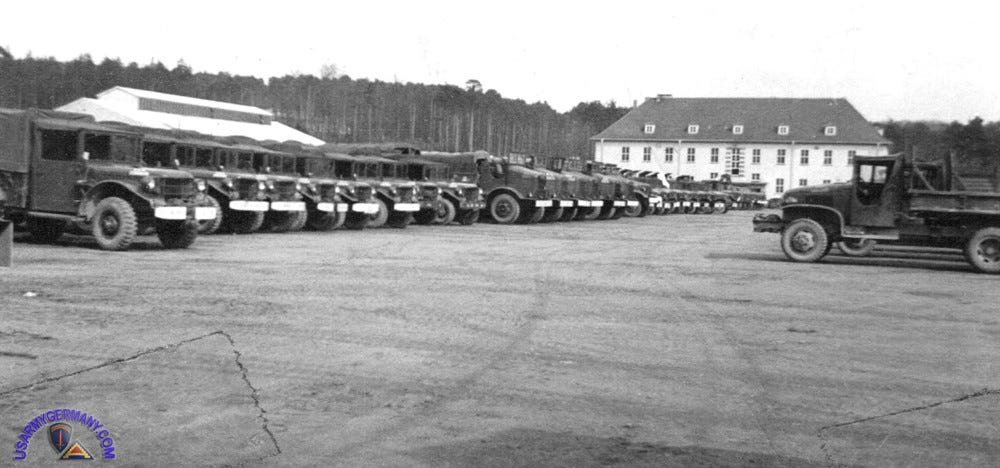
GRANITE’s clandestine communications involved face-to-face meetings with handlers and couriers as well as dead drops. He also sent coded letters to safe houses in Berlin and Lithuania, and at times received encrypted instructions via radio.
In the early 1960s, GRANITE requested to return to Lithuania ostensibly to reunite with his family and was successfully repatriated via “a neutral country” in May 1962.
Several recently released documents indicate that GRANITE’s work for the Lithuanian KGB may have continued into the 1970s and even the 1980s, but the specific details of these operations require more research.
“Вывод на длительное время агента ‘Гранитаса’ за кордон” [Dispatching Agent GRANITE Abroad for an Extended Period of Time], Undated, Lithuanian Special Archives (LYA), F. K-35, ap. 2, b. 1, l. 26-31, https://web.archive.org/web/20160527153236/http://www.kgbveikla.lt/docs/show/5278.
For a biography of Martynas Gelžinis (1907-1990), see “A Biography [in Lithuanian],” Mažosios Lietuvos enciklopedija, https://www.mle.lt/straipsniai/martynas-gelzinis.
The KGB document misspelled the name of the town as Sonnenberg. However, the town in question was Sonneberg located in Thuringia.
The KGB document did not identify who his interrogators were, or whether they worked for the U.S. military intelligence or the CIA.
Interestingly, according to Gelžinis’s publicly available biography, during the same year in which his meeting with GRANITE took place, he left West Germany and immigrated to the U.S. He continued being involved in the VLIK’s activities, but apparently with less intensity than before. His book on the relations between the Lithuanians and the Germans in the Klaipeda region was published posthumously in 1996.
This reminds me of Kremlin-loyal KGB officer Igor "Nosenko Is A True Defector" Kochnov (KITTY HAWK), who contacted the FBI in 1965 and, without revealing having contacted the Bureau, contacted the CIA in June 1966 by calling Richard Helms at home. James Angleton knew Kochnov was fake, but, having been convinced by his confidant, mentor, and mole-hunting superior, probable KGB mole Bruce Solie in the Office of Security, that the SRD/SBD was penetrated, chose Solie to help him "play" Kochnov back against the KGB. The affair ended nine years later when a former defector, Nicholas Shadrin (Nikolas Artamonov), was kidnapped by the KGB in Vienna and (allegedly) died from being forced to breathe too much chloroform while being "exfiltrated" to Czechoslovakia (according to another probable Kremlin-loyal "defector," Oleg Kalugin).